
Medicare 2026 vs. 2027: What Changes for Parts A, B, C, D and Medigap G & N?
For 2027, Medicare’s Part A hospital deductible, standard Part B premium and deductible, Part D spending limit, and high-deductible Plan G threshold increase. Medicare Advantage benefits and Medigap premiums vary by policy. Plan N’s familiar copay rules remain in Medicare’s published comparison, but its members also face the higher Part B deductible.
The amounts below are finalized national figures for January 1, 2027—not estimates. CMS announced the Part A and B amounts on November 17, 2026. Your own costs may differ because of supplemental coverage, income adjustments, assistance programs, and your plan’s terms.
First, a useful distinction: Medicare has Parts A, B, C and D. G and N are Medigap plan letters. They supplement Original Medicare; they are not extra Medicare parts or Medicare Advantage plans.
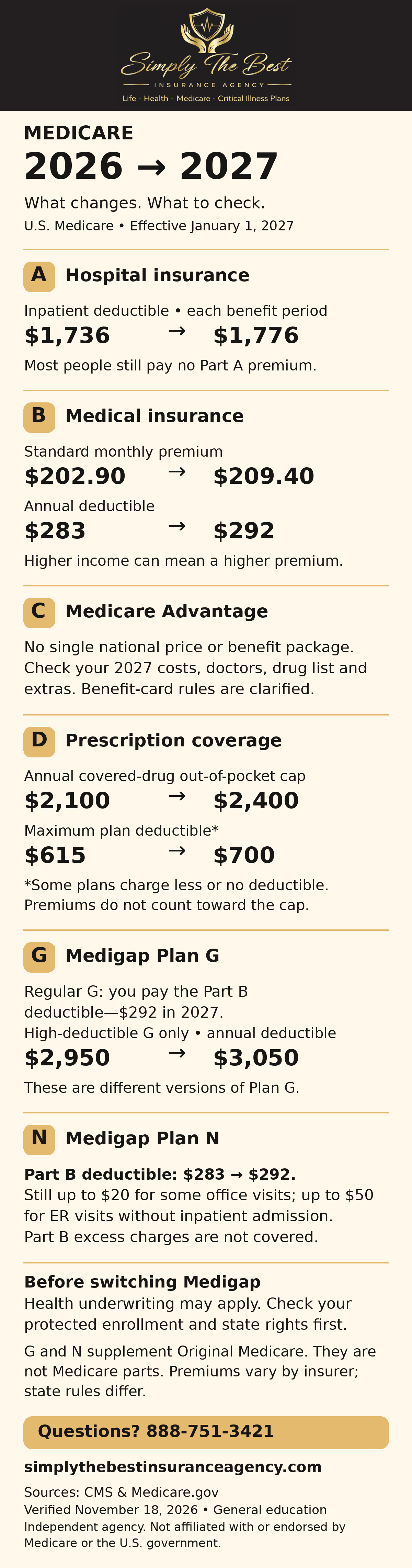
The national numbers at a glance
| Cost | 2026 | 2027 |
|---|---|---|
| Part A inpatient deductible, per benefit period | $1,736 | $1,776 |
| Part B standard monthly premium | $202.90 | $209.40 |
| Part B annual deductible | $283 | $292 |
| Part D annual covered-drug out-of-pocket limit | $2,100 | $2,400 |
| Part D maximum plan deductible | $615 | $700 |
| High-deductible Medigap G: annual deductible | $2,950 | $3,050 |
The high-deductible G amount does not apply to regular Plan G. Some drug plans have a deductible below the maximum or no deductible. These amounts are not a quote for a private policy.
Part A: hospital costs rise, but most people remain premium-free
The hospital deductible rises by $40. It applies to each benefit period, not simply once per calendar year. With Original Medicare, daily hospital coinsurance for days 61–90 increases from $434 to $444; lifetime reserve days rise from $868 to $888. For covered skilled nursing facility care, days 21–100 increase from $217 to $222 per day.
Most people pay no Part A premium based on their or a spouse’s Medicare work history. For those who buy Part A, the monthly amounts rise from $311 or $565 to $328 or $597, depending on work credits. Part A does not have the Part B and D income surcharge.
Part B: budget for the premium and the deductible separately
The standard premium increases by $6.50 per month; the annual deductible increases by $9. They are different expenses. A premium maintains coverage, while the deductible is an amount you may owe when receiving services.
Higher income can add an income-related monthly adjustment amount, or IRMAA, to Part B and Part D. If a qualifying life change reduced your income, ask Social Security whether it can use more recent income information. This review process is not a new 2027 benefit, and an adjustment is not automatic.
Part C: check your own Medicare Advantage plan
There is no single national Medicare Advantage premium or benefit package. Check your 2027 Annual Notice of Change and Evidence of Coverage for provider networks, hospital copays, drug coverage, the medical out-of-pocket limit, and any supplemental benefits. You generally continue paying your Part B premium.
CMS’s finalized 2027 rule clarifies supplemental benefit-card administration: cards must be linked to eligible covered purchases and limited to the specific plan year. Plans must also publish their criteria for certain benefits for chronically ill members. This does not give every beneficiary a grocery allowance or the same extra benefits.
Part D: a higher cap, plus another round of negotiated prices
The covered-drug out-of-pocket limit rises by $300 to $2,400. Once spending that counts toward the limit reaches that threshold, you owe no further out-of-pocket costs for covered Part D drugs for the rest of the calendar year. Premiums and noncovered purchases are separate; this is not a cap on all your Medicare expenses.
The maximum plan deductible rises to $700. Separately, negotiated prices for 15 additional selected Part D drugs begin January 1, 2027, following the first 10 in 2026. A negotiated price is not a guaranteed personal copay. Ask your plan to check your exact medicines, doses, pharmacy and coverage requirements.
Medigap G and N: what changes—and what stays the same
The published federal benefit comparison retains the familiar G and N coverage structure. Both leave the Part B deductible to you, so that amount becomes $292 in 2027. Their premiums are set by insurers, not by a single national Medicare rate; check your own renewal notice.
| For covered Original Medicare costs | Regular Plan G | Plan N |
|---|---|---|
| Part A deductible | Covered | Covered |
| Part B deductible | You pay | You pay |
| Part B coinsurance after the deductible | Covered | Covered except specified office/ER copays |
| Part B excess charges | Covered | Not covered |
Plan N still allows copays up to $20 for some office visits and up to $50 for emergency room visits without inpatient admission. Excess charges are permitted amounts certain providers may charge above Medicare’s approved amount; Plan N does not pay them.
High-deductible G is a different option. Its annual deductible rises by $100 to $3,050. Your Part B deductible counts toward that threshold, but G does not reimburse the Part B deductible itself.
G and N do not include Part D prescription coverage. Massachusetts, Minnesota and Wisconsin standardize Medigap differently. Availability, premiums and state protections need a separate review.
Before switching: confirm your Medigap enrollment rights
Fall Medicare Open Enrollment does not automatically let you buy or switch Medigap without health questions. The federal Medigap Open Enrollment window generally lasts six months starting the first month you are 65 or older and enrolled in Part B. Outside it, underwriting may apply unless a guaranteed-issue right or a state protection applies.
A protected right may limit which plan letters you can buy; do not assume Plan N is included in every situation. Confirm eligibility, acceptance and the new policy’s effective date before ending existing coverage.
Common questions
Does Plan N have a new $3,050 deductible in 2027?
No. That amount applies to high-deductible Plan G and certain other high-deductible Medigap options—not Plan N or regular Plan G. Plan N leaves the $292 Part B deductible, specified office/ER copays and Part B excess charges to you.
Will my Plan G or Plan N premium rise by the same amount as Part B?
Not necessarily. Medicare sets the Part B premium. Your Medigap insurer sets its separate premium, which may depend on your policy, rating method, location and other factors. Review the insurer’s renewal notice and effective date.
Should I change coverage just because the national costs increased?
Not automatically. Compare your doctors, prescriptions, expected use of care, total costs and enrollment rights. Confirm any underwriting requirements before replacing a Medigap policy; a headline cost increase alone does not identify the right coverage for you.
Bring your questions—we’ll help organize the comparison
Gather your 2027 plan or renewal notice, medication list, preferred doctors and current coverage details. Laurie and Samson can help you identify what needs checking for your situation. Confirm policy-specific coverage and costs with the insurer before enrolling.
General Medicare education as of November 18, 2026. National figures are not a carrier quote, coverage guarantee or promise of savings. State rules and policy terms vary. This independent agency is not connected with or endorsed by the U.S. government or the federal Medicare program.
Sources & further reading
- CMS: 2027 Parts A and B premiums and deductibles (November 17, 2026) (opens in a new tab)
- Medicare.gov: Medicare costs (opens in a new tab)
- CMS: Contract Year 2027 Medicare Advantage and Part D final rule (April 2, 2026) (opens in a new tab)
- Medicare.gov: Part D costs and coverage stages (opens in a new tab)
- Medicare.gov: Drug coverage and negotiated prices (opens in a new tab)
- CMS: High-deductible Medigap amounts, effective January 1, 2027 (opens in a new tab)
- Medicare.gov: Compare Medigap plan benefits (opens in a new tab)
- Medicare & You 2027: Medigap benefit comparison (use current online dollar amounts) (opens in a new tab)
- Medicare.gov: Medigap basics and state differences (opens in a new tab)
- Medicare.gov: When you can buy Medigap (opens in a new tab)
- Medicare.gov: What Medigap covers (opens in a new tab)
- Medicare.gov: Medigap premiums and pricing (opens in a new tab)
- Social Security: Request a lower income-related Medicare adjustment (opens in a new tab)
Sources support general education. This article does not endorse a particular policy or guarantee eligibility.